Gastric bypass and mini gastric bypass surgery
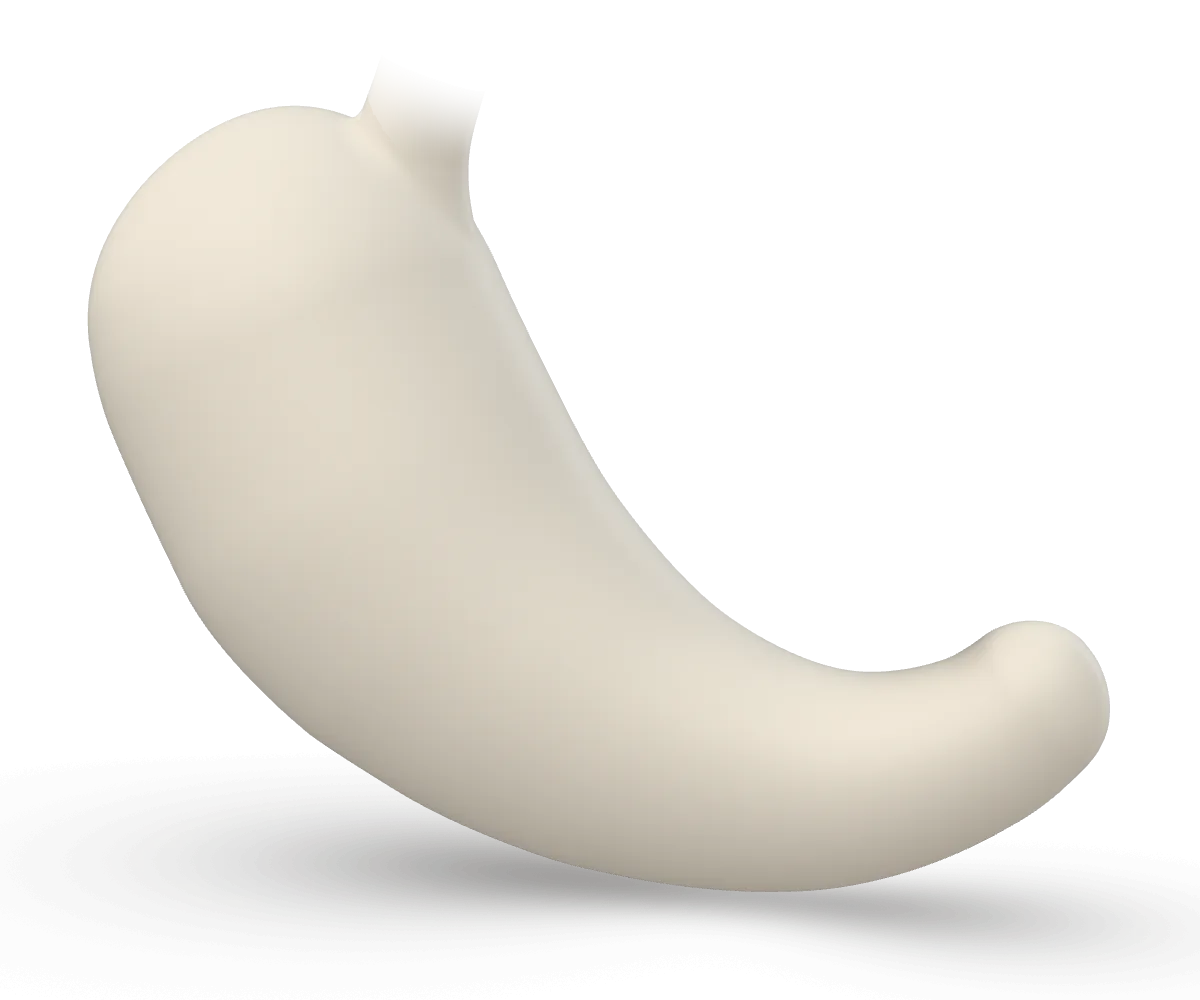
The stomach is not removed; a pouch the size of an egg is joined to the small intestine.Source: ASMBS
On average, 77% of excess weight is lost by the end of the first year.Source: Peterli et al., 2013
Reflux improves in most patients.Source: Peterli et al., 2018
You need lifelong vitamin supplements and a blood test at least once a year.Source: Mechanick et al., 2020
In a gastric bypass, a small pouch the size of an egg is made at the top of the stomach and the small intestine is joined to it. Food skips the rest of the stomach and the first part of the small intestine; the stomach is not removed and stays in place (ASMBS). The medical name is Roux-en-Y gastric bypass; patients often say stomach bypass. The mini gastric bypass (one-anastomosis gastric bypass) uses the same principle with a single join.
Who it is for
The same criteria apply as on the weight loss surgery page. Under the international guideline that is a BMI of 35 or more; under Turkey’s national guideline 40, or 35 with a related illness (Eisenberg et al., 2022; TEMD, 2019). A bypass is preferred over a sleeve in these situations:
- Severe reflux or Barrett’s oesophagus, including reflux that began after a sleeve. A sleeve can worsen reflux; a bypass corrects it in most patients (Peterli et al., 2018; Qumseya et al., 2022; Yeung et al., 2020).
- Type 2 diabetes. The rate of diabetes remission after a bypass is about 10 points higher than after a sleeve, and relapse is less common (McTigue et al., 2020).
A mini bypass is not advised for people with reflux symptoms, inflammation of the oesophagus or Barrett’s oesophagus (Robert et al., 2019). For people who take painkillers continuously or cannot stop smoking, the ulcer risk is high, so a bypass is less suitable (ASMBS).
How the operation is done
Both are done under general anaesthetic by keyhole (laparoscopic) surgery.
In a Roux-en-Y gastric bypass, the stomach is divided in two with a stapler, leaving a small pouch attached to the oesophagus. The small intestine is cut and its lower end is sewn to the pouch. Digestive juices from the rest of the stomach meet the food further down, through a second join (ASMBS).
In a mini gastric bypass, a long, narrow stomach pouch is made and the small intestine is sewn to it with a single join, without being cut, which makes the operation shorter (De Luca et al., 2026).
The two operations compared
| Gastric bypass (Roux-en-Y) | Mini gastric bypass | |
|---|---|---|
| Number of joins | 2 | 1 |
| Operating time | Longer | Shorter |
| Weight loss at 2 years | 86% of excess BMI | 88%, no significant difference (Robert et al., 2019) |
| Diabetes | Effective | No worse than the standard bypass (De Luca et al., 2026) |
| Bile reflux | Rare | 8-56% depending on the study (Keleidari et al., 2021) |
| Nutritional problems, diarrhoea | Less common | More common (Robert et al., 2019) |
| Patients with reflux | Suitable | Not suitable |
Because of bile reflux, some mini bypass patients later need conversion to a standard bypass (Keleidari et al., 2021).
After the operation
The hospital stay is usually 1-3 days (Welbourn et al., 2019). Blood-thinning injections and compression stockings may be prescribed against clots (Aminian et al., 2022).
Eating progresses as on the gastric sleeve page, from clear liquids to purees and on to normal texture in 6-8 weeks (Mechanick et al., 2020). Two rules are specific to bypass. Because sugar passes quickly into the intestine, sweet foods and drinks can cause palpitations, sweating, nausea and diarrhoea; this is called dumping, and avoiding sweets prevents it (ASMBS). Aspirin, ibuprofen and similar painkillers can cause an ulcer at the join, so you do not take them without asking your doctor; smoking is stopped for good for the same reason (ASMBS; Mechanick et al., 2020).
For life, you take a multivitamin, calcium (1,200-1,500 mg), vitamin D, iron and B12 every day. Your blood is checked every few months in the first year, then at least once a year (Mechanick et al., 2020; NICE, 2026). Alcohol enters the blood faster after surgery, and the risk of alcohol dependence roughly doubles after a bypass; stopping alcohol, or keeping it to a minimum, is advised (Scheen, 2025). You are advised to avoid pregnancy for 12-18 months (Mechanick et al., 2020).
Risks
Early on, bleeding occurs in about 1% and is slightly more common after a bypass than after a sleeve (Zafar et al., 2019). A leak at a join, and a blood clot in the leg or lung (0.2%), can occur (Aminian et al., 2022). Within the first 30 days, a serious problem occurred in 5% of bypass patients and 2.6% of sleeve patients (Arterburn et al., 2018). Death related to the operation is 0.03-0.2% (Eisenberg et al., 2022).
In the long term, the following can occur (ASMBS):
- Dumping and an ulcer at the join (marginal ulcer). Both are largely prevented by the eating and medicine rules above.
- Internal hernia and bowel obstruction. The intestine can slip into gaps created by the operation and become trapped; with sudden severe abdominal pain and vomiting, go to a hospital without waiting.
- Narrowing. The join can narrow; it is widened with an endoscopic balloon.
- Vitamin and mineral deficiency. If supplements lapse, iron deficiency occurs in 20-55% of patients after a bypass; B12, folate and vitamin D can also fall (Parrott et al., 2017).
Within five years, 22% of bypass patients and 16% of sleeve patients needed another operation or procedure (Peterli et al., 2018).
Results
Excess weight is the part of your weight above what would give you a BMI of 25 at your height. Under the bariatric surgery guideline of the Society of Endocrinology and Metabolism of Turkey, optimal weight loss is 50-80% of excess weight (TEMD, 2018).
In a randomised trial, gastric bypass patients had lost on average 77% of their excess weight by the end of the first year (Peterli et al., 2013). By the fifth year this had fallen to 68% (Peterli et al., 2018). The difference between the two figures is weight that came back over the years. The results in type 2 diabetes are on the metabolic surgery page. Results vary from person to person; a lasting result depends on keeping to the eating plan, staying active and attending follow-up.
SADI-S and duodenal switch
The duodenal switch (biliopancreatic diversion) adds to a gastric sleeve a bypass of about three quarters of the small intestine; SADI-S is its shorter, single-join form (ASMBS). They are considered at very high BMI, after a sleeve that has not produced enough weight loss, or in hard-to-control diabetes. They give the greatest weight loss and diabetes improvement of all the operations (ASMBS; Mingrone et al., 2021). The trade-off is malabsorption. Stools become looser and more frequent, and the risk of deficiency in protein, iron, calcium, vitamin A, zinc and copper is the highest. Supplements and blood tests are more frequent (Mechanick et al., 2020). Long-term data on SADI-S are still limited (Brown et al., 2021).
Other options
The gastric sleeve is a simpler operation; its vitamin deficiency and ulcer risks are lower, its reflux risk higher. The gastric balloon is temporary. Medicines such as semaglutide and tirzepatide also produce weight loss; a large part of it comes back when the medicine is stopped (Cohen et al., 2024).
Frequently asked questions
What is the difference between gastric bypass and gastric sleeve?
In a sleeve, most of the stomach is removed and the intestine is untouched. In a bypass, the stomach stays in place and a small pouch is joined to the small intestine. Bypass gives slightly more weight loss and corrects reflux; in return, the risks of vitamin deficiency, ulcers and bowel obstruction are higher (Arterburn et al., 2018; ASMBS).
What is the difference between mini gastric bypass and gastric bypass?
A mini bypass has a single join and the operation is shorter. Weight loss and diabetes improvement are similar to the standard bypass. Bile reflux, diarrhoea and nutritional problems are slightly more frequent, and it is not advised for people with reflux (De Luca et al., 2026; Robert et al., 2019).
How do you eat after gastric bypass?
You progress from liquids to purees and soft foods, reaching normal texture in 6-8 weeks. Sugary foods and drinks are limited because they cause dumping. You take at least 60 grams of protein and 1.5 litres of fluid a day, and you do not drink with meals (Mechanick et al., 2020).
Do you regain weight after gastric bypass?
Some of it can come back. In a randomised trial, patients had lost on average 77% of their excess weight at the end of the first year and 68% at the fifth year; the gap is regained weight (Peterli et al., 2013; Peterli et al., 2018). If weight loss is insufficient or weight comes back, medicines are considered before a second operation (Cohen et al., 2024).
Does gastric bypass stop reflux?
In most patients, yes. In a five-year comparison, reflux had gone in 60% of bypass patients and 25% of sleeve patients (Peterli et al., 2018). After a mini bypass, bile reflux can occur.
Do you need vitamins for life after a bypass?
Yes. You take a multivitamin, calcium, vitamin D, iron and B12 every day. If you stop, serious deficiencies can develop; iron deficiency has been reported in 20-55% of patients after bypass (Mechanick et al., 2020; Parrott et al., 2017).
Sources
- ASMBS. Bariatric surgery procedures (patient information page) asmbs.org
- Eisenberg D et al. 2022 American Society of Metabolic and Bariatric Surgery (ASMBS) and International Federation for the Surgery of Obesity and Metabolic Disorders (IFSO) indications for metabolic and bariatric surgery. Obes Surg 2023;33:3-14 pmc.ncbi.nlm.nih.gov
- TEMD (Society of Endocrinology and Metabolism of Turkey). Obesity diagnosis and treatment guideline, 2019 (Turkey's national guideline, in Turkish) file.temd.org.tr
The content of this page is for information only. For diagnosis and treatment, always consult your doctor.
Last updated:
Prepared and reviewed by: Dr. Ömer Söylemez, General Surgery Specialist