Gastric sleeve surgery (sleeve gastrectomy)
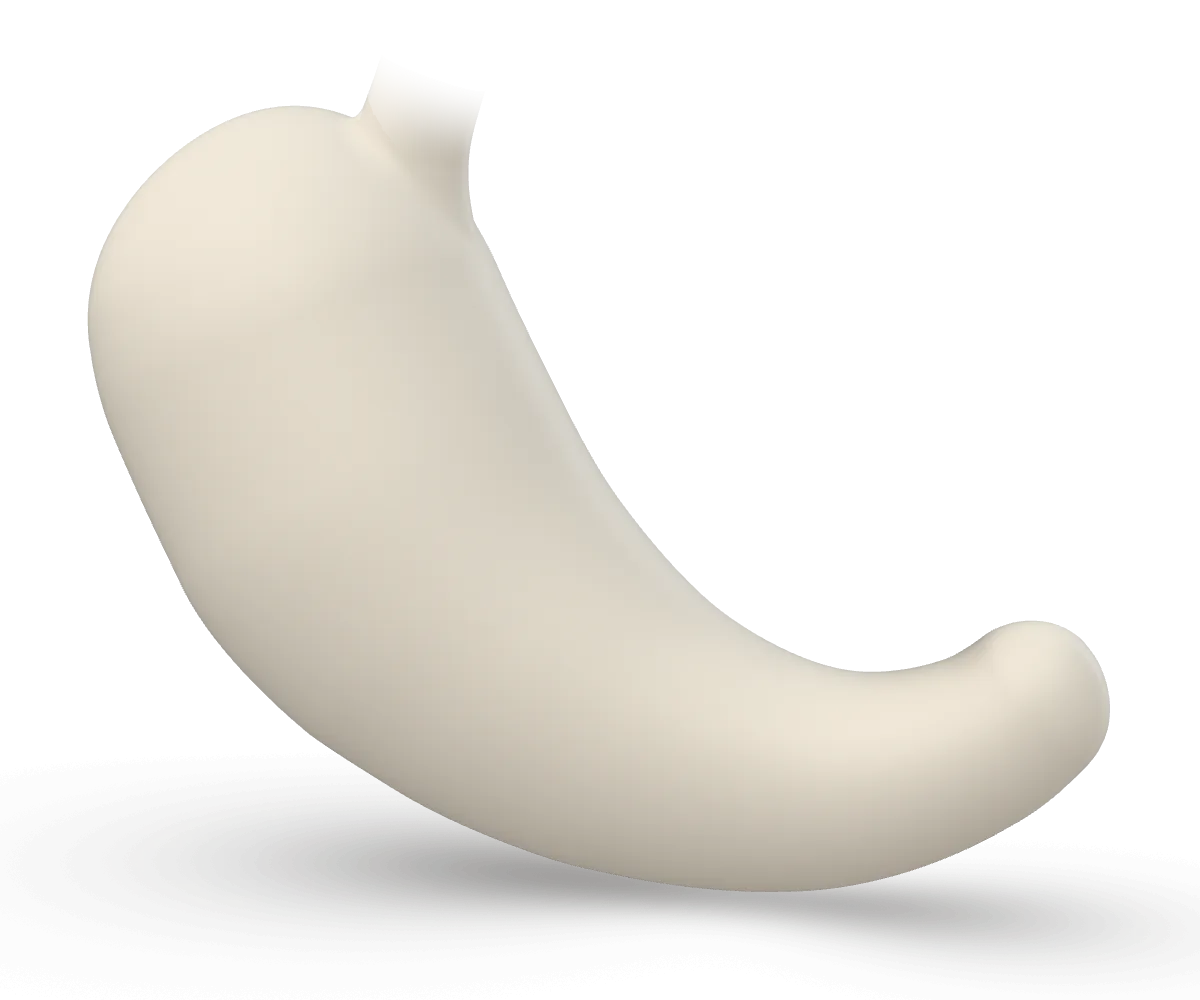
About 80% of the stomach is removed.Source: ASMBS
You usually stay 3 nights in hospital.Source: Dr. Ömer Söylemez
On average, 72% of excess weight is lost by the end of the first year.Source: Peterli et al., 2013
The operation is permanent; the removed part of the stomach cannot be put back.
Gastric sleeve surgery removes about 80% of the stomach and leaves a narrow, banana-shaped tube (ASMBS). With a smaller stomach you feel full after less food. The part of the stomach that makes the hunger hormone is removed too, so appetite falls. The medical name is sleeve gastrectomy; most patients just say gastric sleeve.
Who it is for
The decision is made at your consultation, based on body mass index (BMI) and on the illnesses linked to your weight. Two sets of criteria are in use today.
- Under the international guideline, surgery is recommended from a BMI of 35 upwards. It should also be considered between BMI 30 and 34.9 if you have a metabolic disease such as type 2 diabetes. There is no upper age limit; general health is assessed instead (Eisenberg et al., 2022).
- Under Turkey’s national guideline, you need a BMI of 40 or more, or a BMI of 35 or more together with at least one illness such as diabetes, high blood pressure or sleep apnoea. Under 18 and over 65, the decision weighs benefit against risk (TEMD, 2019).
If you have severe reflux or Barrett’s oesophagus, gastric bypass may suit you better than a sleeve (Yeung et al., 2020). Pregnancy or a plan to become pregnant within a year, untreated serious psychiatric illness, and alcohol or drug dependence can postpone surgery. If you smoke, you must stop at least 6 weeks before the operation (Mechanick et al., 2020).
Before the operation
You have blood tests, an endoscopy and, if needed, an abdominal ultrasound. Specialists in cardiology, endocrinology, chest medicine, psychiatry and anaesthesia assess you. A dietitian plans how you will eat after surgery.
How the operation is done
The operation is done under general anaesthetic through a few small cuts in the abdominal wall, by keyhole (laparoscopic) surgery. The stomach is divided lengthwise with a surgical stapler and the larger part is removed. The remaining stomach keeps the normal route from the oesophagus to the intestine; the intestines are not altered. The removed part cannot be put back, so the operation is permanent.
After the operation
You start walking on the day of surgery. Most patients stay 3 nights in hospital and go home on day 4. Injections and compression stockings may be prescribed to lower the risk of blood clots. Most clots appear after discharge, so keep following this advice at home (Aminian et al., 2022).
Eating progresses in stages (Mechanick et al., 2020):
- Sugar-free clear liquids for the first 1-2 days.
- About two weeks of liquid foods and protein drinks.
- About two weeks of pureed foods.
- Then soft foods, and normal-textured meals within 6-8 weeks.
How quickly you move between stages varies from person to person and is planned with your dietitian. You eat 3 main meals and 3 snacks a day, in small portions. Chew every mouthful well. Do not drink with meals; sip fluids at least 30 minutes after eating. The daily targets are at least 1.5 litres of fluid and at least 60 grams of protein (Mechanick et al., 2020).
Fizzy drinks and alcohol are not advised at all in the first months. After surgery, alcohol enters the blood faster and stays there longer (ASMBS). You need to stop smoking for good.
You take a multivitamin, calcium and vitamin D for life. B12 and iron are added when needed, and your blood levels are checked regularly (Mechanick et al., 2020). You are advised to avoid pregnancy for 12-18 months after surgery.
Movement starts on the first day. The target is at least 150 minutes of moderate exercise a week plus strength training on 2-3 days a week (Mechanick et al., 2020). Weighing yourself once a week or once every two weeks is enough. Do not compare yourself with other patients; how fast the stomach empties and the metabolism differ from person to person.
Risks
Like any operation, the gastric sleeve has risks. The rates reported in large studies are:
- A leak from the staple line on the stomach in about 0.3-0.4% (Ma et al., 2024).
- Bleeding in about 1%, less often after a sleeve than after gastric bypass (Zafar et al., 2019).
- A blood clot in the leg or lung in 0.1-0.2% (Aminian et al., 2022).
- Death related to the operation in 0.03-0.2% (Eisenberg et al., 2022).
The commonest long-term problem is reflux. New reflux begins in about 23% of patients after the operation, and existing reflux can get worse. A change at the lower end of the oesophagus called Barrett’s oesophagus has been reported in about 8%. In about 4% of patients, severe reflux means the sleeve has to be converted to a gastric bypass (Yeung et al., 2020). For this reason an endoscopy may be advised at follow-up visits.
If you do not keep up the vitamin supplements, deficiencies of B12, iron and vitamin D can develop (Mechanick et al., 2020).
Results
In Dr Ömer Söylemez’s practice, the target is to lose 80% of excess weight by the end of the first year.
Excess weight is the part of your weight above what would give you a BMI of 25 at your height. Under the bariatric surgery guideline of the Society of Endocrinology and Metabolism of Turkey, optimal weight loss is 50-80% of excess weight (TEMD, 2018).
In a randomised trial, patients who had a gastric sleeve had lost on average 72% of their excess weight by the end of the first year (Peterli et al., 2013). By the fifth year this had fallen to 61% (Peterli et al., 2018). The difference between the two figures is weight that came back over the years.
Weight-related illnesses such as type 2 diabetes, high blood pressure and sleep apnoea also improve markedly (Eisenberg et al., 2022). Results vary from person to person. A lasting result depends on keeping to the eating plan, staying active and attending follow-up.
Other options
Gastric bypass gives more weight loss than a sleeve (Arterburn et al., 2018) and reduces reflux (Peterli et al., 2018). Because the intestine is also altered, follow-up is stricter.
Medicines such as semaglutide and tirzepatide also produce weight loss. When the medicine is stopped, a large part of the lost weight comes back. According to the international consensus statement, surgery gives the more lasting result in the long run; medicines can be added before or after surgery when needed (Cohen et al., 2024). Which option suits you is assessed at your consultation.
Frequently asked questions
How many days do you stay in hospital after gastric sleeve surgery?
Usually 3 nights, going home on day 4. This can change depending on how you recover after the operation.
What BMI do you need for gastric sleeve surgery?
Under the international guideline, a BMI of 35 or more. Under Turkey's national guideline, a BMI of 40 or more, or 35 or more together with a weight-related illness. If you have type 2 diabetes, you may be assessed at lower values (Eisenberg et al., 2022; TEMD, 2019).
Does gastric sleeve surgery cause reflux?
It can. About one in four patients develops new reflux after the operation (Yeung et al., 2020). If you already have severe reflux, gastric bypass may suit you better.
When can you eat normal food after the operation?
After liquids, purees and soft foods, you usually move on to normal-textured meals within 6-8 weeks (Mechanick et al., 2020).
Do you regain weight after gastric sleeve surgery?
Some of it can come back. In a randomised trial, patients had lost on average 72% of their excess weight at the end of the first year and 61% at the fifth year (Peterli et al., 2013; Peterli et al., 2018). A steady eating pattern, exercise and regular follow-up reduce regain.
Can I get pregnant after the operation?
You are advised to avoid pregnancy for the 12-18 months after surgery (Mechanick et al., 2020). After that, pregnancy is possible; you are followed together with an obstetrician.
Sources
- Eisenberg D et al. 2022 American Society of Metabolic and Bariatric Surgery (ASMBS) and International Federation for the Surgery of Obesity and Metabolic Disorders (IFSO) indications for metabolic and bariatric surgery. Obes Surg 2023;33:3-14 pmc.ncbi.nlm.nih.gov
- TEMD (Society of Endocrinology and Metabolism of Turkey). Obesity diagnosis and treatment guideline, 2019 (Turkey's national guideline, in Turkish) file.temd.org.tr
- TEMD (Society of Endocrinology and Metabolism of Turkey). Bariatric surgery guideline, 2018, 2019 reprint (in Turkish) file.temd.org.tr
The content of this page is for information only. For diagnosis and treatment, always consult your doctor.
Last updated:
Prepared and reviewed by: Dr. Ömer Söylemez, General Surgery Specialist