Gastric balloon and swallowable gastric balloon
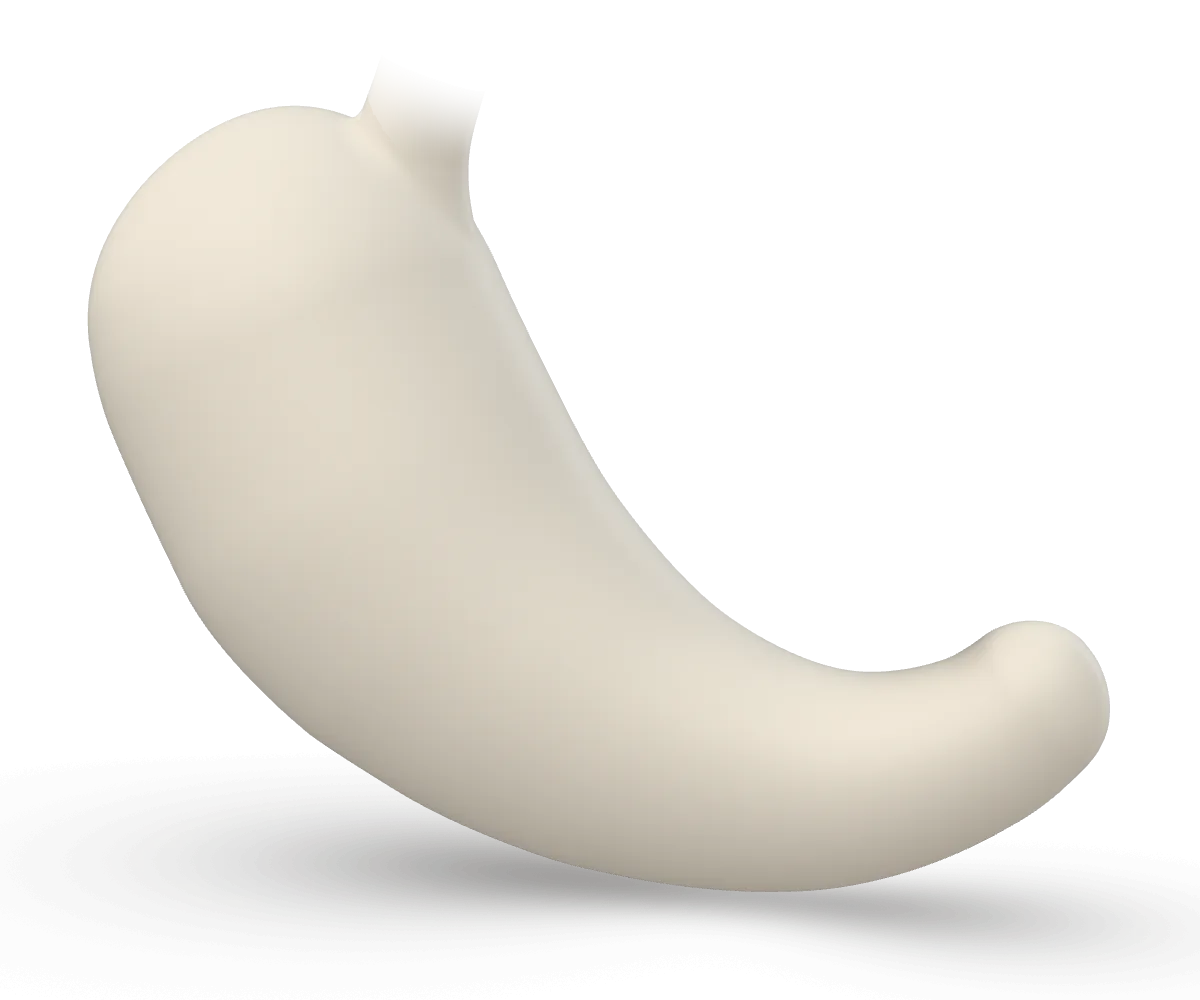
The balloon is not an operation; it is placed by endoscopy or swallowed as a capsule.Source: Ienca et al., 2020
The balloon stays in the stomach for 4-6 months; then it is removed or empties by itself.
When the balloon is removed, on average 35% of excess weight has been lost.Source: Singh et al., 2020
Its effect is temporary; some of the weight comes back once the balloon is out.Source: Courcoulas et al., 2017
A gastric balloon (intragastric balloon) is a soft balloon placed in the stomach. It takes up room, so you feel full after less food. It is not an operation; after a few months it is removed or empties by itself. It is a temporary aid that gets weight loss started. A lasting result depends on keeping the eating and activity habits you build while the balloon is in place (Mechanick et al., 2020; Jirapinyo et al., 2024).
Who it is for
The guideline of the endoscopy societies recommends the balloon, together with lifestyle change, from a BMI of 30, or from 27-29.9 with a related illness (Jirapinyo et al., 2024). It is an option for people who do not want surgery or do not meet the criteria for it. For people who do meet the criteria on the weight loss surgery page, surgery gives more weight loss, and the loss lasts longer (Cohen et al., 2024). Whether a balloon suits you is assessed at your consultation and, if needed, with an endoscopy.
Types of balloon and how they are placed
Endoscopic and swallowable balloons stay in the stomach for 4-6 months; an adjustable balloon can stay longer (Courcoulas et al., 2017; Ienca et al., 2020; Abu Dayyeh et al., 2021).
- Endoscopic balloon. Under light sedation, it is passed through the mouth into the stomach and filled with liquid. After 6 months it is emptied and removed, again by endoscopy (Courcoulas et al., 2017).
- Adjustable balloon. Placed by endoscopy; its volume can be increased or reduced later, and it can stay in the stomach longer. In the randomised trial it stayed for 32 weeks (Abu Dayyeh et al., 2021).
- Swallowable balloon. Swallowed as a capsule and filled with liquid once it reaches the stomach; no endoscopy or anaesthetic is needed. After about 4 months it empties by itself and passes out in the stool (Ienca et al., 2020).
How much weight you lose
The figures are study averages. Excess weight is the part of your weight above what would give you a BMI of 25 at your height. In the pooled result of 15 studies, patients had lost on average 35% of their excess weight when the balloon was removed at 6 months (Singh et al., 2020). With the endoscopic balloon the figure at 12 months is 25% (ASGE, 2015). In a randomised trial of an endoscopic dual balloon, patients lost 25% of their excess weight in 24 weeks, against 11% with diet and exercise alone (Ponce et al., 2015). With the adjustable balloon, 15% of body weight was lost in 32 weeks (Abu Dayyeh et al., 2021).
After the balloon is removed, some of the weight comes back. In a randomised trial of the endoscopic balloon, patients had lost 10% of their body weight at 6 months; 6 months after removal, the loss had fallen to 7.6% (Courcoulas et al., 2017). If eating and exercise are not kept up, regain is greater (Muriel et al., 2025). That is why the balloon months are spent under dietitian follow-up, and follow-up continues after the balloon is out.
Side effects and risks
Nausea, vomiting and abdominal pain are common in the first days. In the endoscopic balloon trial, 87% of patients had nausea, 76% vomiting and 58% abdominal pain (Courcoulas et al., 2017). Some patients cannot tolerate the balloon and it is removed early; this happened in 19% with the endoscopic balloon, 17% with the adjustable balloon and 3% with the swallowable balloon (Courcoulas et al., 2017; Abu Dayyeh et al., 2021; Ienca et al., 2020).
Serious problems are rare. In a review covering 2,107 patients with the swallowable balloon, the rate of serious adverse events was 0.9% (Silva et al., 2024). In a series of 1,770 patients, early deflation occurred in 0.6%; with an older design, three bowel obstructions and one each of stomach perforation, pancreatitis and blockage of the stomach outlet were reported (Ienca et al., 2020). In the adjustable balloon trial, device-related serious events were 4% (Abu Dayyeh et al., 2021). Inflammation of the oesophagus and movement of the balloon can also occur (Kumar et al., 2017). If you have severe abdominal pain, or vomiting that does not stop, while the balloon is in place, go to a hospital without waiting.
Other options
Weekly injections such as semaglutide and tirzepatide produce an average loss of 15-20% of body weight over 68-72 weeks; when the medicine is stopped, about two thirds of the lost weight comes back within a year (Wilding et al., 2021; Jastreboff et al., 2022; Wilding et al., 2022). After a gastric sleeve, patients lose on average 72% of their excess weight by the end of the first year, and after a gastric bypass 77% (Peterli et al., 2013). This loss lasts longer (Arterburn et al., 2018). Which option suits you is assessed at your consultation.
Frequently asked questions
What are the side effects and harms of a gastric balloon?
The commonest harm is nausea, vomiting and abdominal pain in the first days; in 3-19% of patients the balloon is removed early because it cannot be tolerated. Rarely there is inflammation of the oesophagus, or the balloon deflates, passes into the intestine and causes a blockage; very rarely, a perforation of the stomach (Courcoulas et al., 2017; Ienca et al., 2020; Kumar et al., 2017).
Is a gastric balloon dangerous?
Serious problems are rare. In a review of 2,107 patients, serious adverse events with the swallowable balloon were 0.9%, and in the adjustable balloon trial device-related serious events were 4% (Silva et al., 2024; Abu Dayyeh et al., 2021). While the balloon is in place, severe abdominal pain and vomiting that does not stop must be taken seriously.
Is there a risk of death with a gastric balloon?
The risk is low; in large studies the rate of serious events is under 1% (Silva et al., 2024). Rare complications such as bowel obstruction and stomach perforation are life-threatening if found late; in a series of 1,770 patients with an older design, three obstructions and one perforation were reported (Ienca et al., 2020). That is why severe abdominal pain means going to a hospital without waiting.
How much weight do you lose with a gastric balloon?
When the balloon is removed, on average 35% of excess weight has been lost (Singh et al., 2020). Without a change in eating, this figure is not reached.
Does the weight come back after the balloon is removed?
Some of it does. In a randomised trial, patients had lost 10% of their body weight at 6 months; 6 months after removal, the loss had fallen to 7.6% (Courcoulas et al., 2017). If dietitian follow-up and exercise continue, regain is smaller.
Who can have a gastric balloon?
Together with lifestyle change, people with a BMI of 30 or more, or 27-29.9 with a related illness (Jirapinyo et al., 2024). It is an option for people who do not want surgery or do not meet the criteria for it.
Sources
- Mechanick JI et al. Clinical practice guidelines for the perioperative nutrition, metabolic, and nonsurgical support of patients undergoing bariatric procedures, 2019 update (AACE/ACE, TOS, ASMBS, OMA, ASA). Surg Obes Relat Dis 2020;16:175-247 pubmed.ncbi.nlm.nih.gov
- Jirapinyo P et al. American Society for Gastrointestinal Endoscopy-European Society of Gastrointestinal Endoscopy guideline on primary endoscopic bariatric and metabolic therapies for adults with obesity. Endoscopy 2024;56:437-456 pubmed.ncbi.nlm.nih.gov
- Cohen RV et al. International consensus position statement on the role of obesity management medications in the context of metabolic bariatric surgery: expert guideline by the International Federation for the Surgery of Obesity and Metabolic Disorders (IFSO). Br J Surg 2024;111:znae283 pubmed.ncbi.nlm.nih.gov
The content of this page is for information only. For diagnosis and treatment, always consult your doctor.
Last updated:
Prepared and reviewed by: Dr. Ömer Söylemez, General Surgery Specialist